With term four comes reports, and with reports comes up to date summative assessments.
As a result, summative assessments have already begun being carried out in my classroom - so far students have all sat an IKAN test and some students have completed running records. The great thing about summative assessment is it shows visible growth that students have made as they have sat the same standardised test earlier on this year. It also shows me as a teacher where I need to place more focus and which students continue to/or are starting to need specific help or extension and as a result I am able to make changes to my programme. I was especially pleased with the IKAN results of my students as it demonstrates that our math warm ups and number knowledge revision games have been effective in helping children to grow and maintain their number recall. The running record results of the students who have sat it so far have all been positive as all students have moved up a reading level and the students have all made progress in their comprehension also. The moment that inspired me the most with my running record data however was when a student took the ability to transfer her summative assessment and make it into a formative assessment for herself - she said to me - I know that I need to work on inferencing now - I am going to make that part of my self directed learning programme for the rest of the term.
However, the one thing that frustrates me is about summative assessment is that all students are required to sit the same/similar tests - and this is where assessment for learning becomes a real positive - this is no longer the case with assessment for learning.
Each child is provided with feedback and feed forward based on where they are at and the assessment becomes real for them - it becomes a tool that they can utulise - whether in the form of feedback and feedforward from me as a teacher or whether via self/peer assessment and feedback/feedforward.
When I came back on Monday of term 4 I was unsure how much of the work around success criteria influencing assessment for learning that my students would retain as Term 3 had left them all very tired and they had just had two weeks break. However, within the first block of learning time I overheard a number of students referring back to their success criteria both individually and to help others achieve their WALTs. This was a real positive for me as it showed that the work that my students had been doing on having clarity about their learning was transferring through all curriculum areas for all students - making assessment something that they then began to see as something that helped them learn rather than something that was there to judge what they had learnt.
The last month has been a time of exploration, trying new things and going back to my roots all at once. It is an interesting and intriguing place to be - one that I am glad that I have been in also. The title of this post - that to the world you may be just one person, but to one person you may be the world has hit home in all aspects of my professional life over the past month.
Over the weekend, two of my mentors sent links to me that seem to have mixed together more than I thought that they would - one of these people works with me and is on a course and so directed me towards a strengths quiz that she is doing as part of this, the other used to be my tutor teacher and sent me an reading that he thought would be relevant based on previous discussions that we have had in the past and continue to have via email. The reading is by Kate Mason and is titled 'How does personality affect teaching and learning: Judging or perceiving?'. The strengths quiz is run through the University of Pennsylvania and is titled the VIA Survey of Character Strengths. Both of these things have helped me to step back and see who I am and how this reflects in my classroom, rather than allowing me to remain caught up in the day to day running of a classroom filled with energetic, hormone filled 11 year olds.
My strengths as per the character quiz came out as follows:
I am lucky enough to have a range of wonderful mentors that I look up to within my workplace. The first is my tutor teacher - she is always there to ask questions to and has a lot of faith in our ability to help our students achieve success even when things seem hard.
The second person who continually helps to shape and inspire me both personally and professionally is a colleague from another team within the school. She is someone who uplifts me and inspires me with her practice and her relationships with her students and other colleagues. I was looking up mentoring this morning and came across the following two quotes that I think summarise her mentoring style quite succinctly.
These are:
"A lot of people have gone further than they thought they could, because someone else thought that they could."
"The greatest good you can do for another is not just share your riches but to reveal to them their own."
The third person who I look up to as a mentor and guide was my tutor teacher but no longer works at this school. He asks questions that inspire me to grow, questions that he does not always know the answers to, but questions that he knows will hook me and help me drive my own inquiry. The following quotes sprung out at me about this person when I was searching mentoring this morning were:
"Always surround yourself with people who are better than you."
"We all need someone who inspires us to do better than we know how."
During the past week I found myself reaching into things that these three people have taught me when facing a difficult situation with a student. The character survey that I completed above was evident throughout this interaction. This student is one of the most loving children that I know but she has faced difficulties that are emotionally beyond her years in her childhood. On Thursday she left my class without warning and in a huge mood, she proceeded to tell other students many negative things about me and my practice. However, thanks to the leadership that I have experienced and my background knowledge of this student I understood where she was coming from and how I could help her. She calmed down over the next couple of hours and came back to class just before the bell. I asked her to stay behind after the bell and had a chat with her, in which she emphasised that she just needed someone who could listen and care and did not feel that the other students were doing that for her. I reminded her that I am always there for her, and we discussed the weekend excursions that we had been on previously to support this. She went home a much happier child. I did not see her until the following afternoon as I was away at a school gymnastics competition all day, however when I returned to school the following afternoon she came running up to me and told me how much she had missed me that day before proceeding to tell me all about her day. At that moment I realised that without knowing it, I had applied mentoring techniques that I had learnt from those who inspire me to help this girl see the love this world had for her and to make her worth felt.
The only way to sum up the past month is in fact - to the world you may just be one person, but to one person you may be the world. As teachers we never know who we are influencing and where our influence starts and stops and so it is crucial that we do indeed spend time with those who lift us up so that we can continue to be those people to others also.
We have just completed our second video observation feedback session based on Michael Absolum's Clarity in the Classroom text. Our first one was a term ago and we received feedback based on a rubric then and have just had to redo this now. This second rubric highlights the growth that I have made in regards to student and teacher understanding of what they are learning, how and why they are going to learn it and how they will know if they are successful.
As a school we have been focussed on ensuring that our learning intentions and success criteria are developed alongside our students in a way that enables the students to both develop ownership and achieve success. We have been working through the book 'Clarity in the Classroom' by Michael Absolum. I have really enjoyed seeing the link between university studies and working within the classroom as this is the first book that we have used at university that has linked directly into what we have been doing in the school setting.
Last term we were videoed and after that we worked alongside a mentor from the senior management team to develop ways in which we could be more successful in helping learning intentions and success criteria become more commonplace and effective within our everyday teaching. For me, this is where all of my work with POGIL originated.
Last week in staff meeting we were shown this clip by John Hattie about learning intentions and success criteria and we discussed the importance of having these in very small breakable chunks for them to be most effective for students. Below are the notes that I took during this staff meeting and presentation. Some of this was just simply a reminder however aspects of it gave me something new to think about and consider.
Learning Intentions are about what we are going to learn not
what we are going to do. Best way to
show success criteria is to model what a successful one would look like.
If you have a clear understanding of what success looks like
you are able to get rid of what matters and teach just that. If you don’t know what you want the kids to
achieve in bite sized chunks, then it is impossible for the kids to know what
they need to achieve.
If we want to develop life long learning then we should not
be the ones who are telling them they are successful – they need to be able to
self regulate it against success criteria.
Success criteria should not just be performance related –
needs to be mastery focused also – and teachers need to show the students what
mastery looks like.
Need to have a deep understanding of where each child is to
understand what success would look like for each kid – is it exactly the same
for each child – and when it is not, how can we make it so that it is something
that every child can achieve.
I have attached the link below so that you are able to watch it - I personally found the first half of it most effective.
Every day, I encourage my students to express their learning in a variety of ways and discuss with them why and how it is beneficial to do so - however I have found myself not always doing this since developing this blog. In a recent staff meeting we discussed the difference between wondering, pondering, journalling and reflecting - how these are all based around different things - and that reflecting should be based around certain criteria and around our children and their learning. In class today I was working with a student on Wordle and realised just how well that tool can sum up the main ideas of something simply by how often they are repeated. I decided to place each of my recent reflective blog posts in Wordle so that I could get a true representation of what it is I am focussing on - with Wordle the words that are repeated the often (and therefore the largest focus in the reflection) are the words that are largest. I was happily surprised with what I saw and it was a timely reminder that I am on track with my reflections.
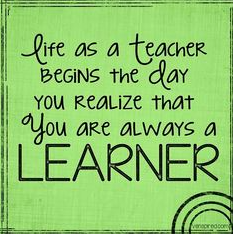
Coming out of university I had in my CV what I believed to be comments that spoke very highly of me as a student teacher. What I of course did not realise was the huge difference between being a student teacher and being a full time classroom teacher in charge of your own classroom. I had heard it all before from the teachers in my family - give yourself space to breathe, you can't do everything at once, everybody makes mistakes... and every time that I heard it from someone new I got frustrated. I didn't want to be a beginning teacher that felt like I was drowning and knew nothing - that may or may not however have been the exact impression that I gave off to the principal of my school in the first term. I would take everything on, and crumble inside - but remind management many, many times that I am brand new at this - it was in a way my excuse for not having everything perfect. What I didn't realise was that it was perfect at that stage to be a brilliantly imperfect teacher - and through not knowing things, making my own mistakes and learning from the mistakes of others was exactly what I was supposed to be doing - that was the perfect role for me at the time. I had left university as a teacher, and by mid year of my first year of teaching I had finally reaccepted my position as a learner. In line with this, I find the following saying very true - both for myself as a new teacher and for teachers who have been in their position for many years and may not necessarily want to learn new things.
Over the following two terms, I relished my role as a learner - and soaked up as much as I could - whilst still learning the ins and outs of the school that I was working at. This year is where I believe that the change has been for me however. I have an outstanding tutor teacher who has complete faith in my abilities - both to teach successfully and to fail at teaching (and learn from it). Having a tutor teacher who has seen me succeed well, and seen me fail (not so well) has led to conversations that are very growth minded. He knows that I want to learn and grow and that I see myself as a learner - and so he has led from alongside me and provided direction by jumping on the learning journey with me. Working underneath this person has moved my love of teaching students to a passion for developing myself as a teacher continually. He has helped me set goals, visit other schools, observed me, helped me find professional readings that challenge me - and most importantly allowed me to play around with my own style of teaching. In my class I have been experimenting with POGIL (as referred to in previous posts). This has been one of the things that I have done as my Teaching as Inquiry this year - and I have fallen in love with it. Hence the next picture.
However, I am extremely grateful that I learnt the importance of viewing myself as a learner early on in my first year of teaching. The POGIL style of teaching was slightly chaotic at first and left my team leader making comments about the noise level in the room - and wondering if the students could concentrate at that noise level. However, as the weeks have gone by and I have adapted the philosophy behind POGIL to my classroom everything has settled down. The children love their new style of learning and so do I. They are inquisitive, they have urgency for their work - and they truly are learning because they want to - and for no reason except for that. They help to analyse their own data and determine what they will be learning and they love it. The same team leader came into my room last week and commented on how well the kids were working and the programme that they were doing. As a result of sticking with this, my whole team is now experimenting with POGIL styled mathematics tasks - adapted to the teachers individual journeys with POGIL.
This next picture stuck out to me because with POGIL this is true - my children work so well together that I know that the same depth and breadth of discussion could be happening regardless of whether or not I am in the classroom and working with their group. I have become far more of a facilitator and guide than someone who issues them with instructions etc.
I feel extremely honoured to work with such a great team at my school - and to have the support of other teachers. As well as my TT and my team leader I have had a small number of other teachers come and ask if they can observe how POGIL works also. My students are very keen to share their hard work and I am excited to have these other teachers in my classroom also. These teachers have no experience of POGIL and so it will be a learning curve for them just as much as it is from me and I am extremely interested to see the feedback that they have given me (My tutor teacher and team leader both have researched POGIL before coming to view it in my classroom).
My final thought for the night is the same thing that hit me half way through last year - the best teachers truly are the best learners - teaching is a journey where we help and support each other, through observations, through sharing readings and resources, through being able to talk things through, and sometimes by having a night off together that has absolutely nothing to do with teaching. I aim to be a brilliant teacher who can cater successfully to the individual needs of every student in my class - and to do that I need to be a pretty switched on learner. I am looking forward to continuing on with my teaching journey as a learner - and learning from everyone and everything around me.
It is week six of term two, halfway through the term, and therefore probably an appropriate time to do a formal reflection of my teacher inquiry for this term.
My teacher inquiry question was:
How can I, as the teacher of a year six class, use strategies associated with POGIL to help my students develop independence and autonomy over their learning?
When this inquiry came about I discussed with my tutor teacher the importance of having a variety of sources of evidence to show whether or not this is working and highlight areas that need to change/develop and so I endeavour to do so below. I think that it is so important to have student voice as part of a measure of how successful I am in my teacher inquiry as realistically they are the ones whose learning it is affecting - and therefore they are the best people to be able to provide evidence. At times this is formal feedback in terms of videos and PMI charts and at times this is in the format of questions that my tutor teacher asks my students when he comes to observe me. As I will be referring to student answers to these questions throughout this reflection I have listed the questions below.
What were you learning today in …
Why were you learning that?
What tools have you used to ensure you are successful?
- How blogging has provided a voice for my students
View the hyperlink above to see how blogging has given my students a voice - it has changed the class from our classroom where it is mostly teacher led to being there classroom where it is hugely student led. Be sure to read the comments - it is heart warming to see the way that they support each other, both in terms of providing positive feedback and in the way that they help each other through providing appropriate and timely feedforward. What is most amazing is the way that this feed forward and feedback has crossed from simply being an online tool and become part of how they communicate in the classroom - even my shy students are no longer hesitant to tell other students when they think they are doing well, or how they think they can improve.
- The purpose of success criteria, and how these have influenced what and how my students are learning
- Excerpts from professional discussions that I have had, both with my tutor teacher and with other teachers within what I consider to be my professional learning community
- Reflections on my planning for this style of teaching and how these have changed week to week
Success Criteria
I have hyperlinked Reading Success Criteria that students have created since the start of this term. This is entirely written in student voice with the children referring back to Sheena Cameron's reading comprehension strategy sheets when they get stuck.
I believe that success criteria tie in very closely with POGIL in terms of helping students have responsibility and ownership over their own learning. The following quote speaks volumes about this:
" If learners are to take more responsibility for their own learning, then they need to know what they are going to learn, how they will recognise when they have succeeded and what they should learn it in the first place." (An Intro to AfL, Learning Unlimited, 2004).
Between the learning intention covering the what and the why - and the self created, and peer reviewed, success criteria covering the how students are able to gain insight and control over their own learning - and this is demonstrated both in the PMI chart and the video that are hyperlinked above.
Professional Discussions
When running a programme such as POGIL in a classroom it is important to consider what deliberate acts of teaching I am still doing as a teacher. Recently we were video observed and these were some of the deliberate acts that were discussed:
My focus now is to move away from questioning as the students have the tools and the experience to do that and move towards prompting as my key form of feedback - obviously all strategies are going to need to be applied at different times.
Reflections on Planning
My planning has changed nearly every week that I have been running a POGIL based programme in my classroom. The children contribute to the changes, telling me what they like and what they do not like - and what is beneficial to their learning and what is superfluous. Based on my most recent discussions with my Tutor teacher I will be changing three things:
Writing the learning intention for the week in the format of 'We are learning to... because...' so that students can see immediately what the relevance is and therefore be able to discuss this.
Recording the way that I frame the activity and the learning so that students are able to clearly identify the difference between the two. This is where students have been getting stuck when asked the questions identified earlier - whilst my top students are able to highlight the difference without any problem some of my lower students struggle to and this is the group that I need to be specifically targeting. An example of this is recorded below:
Giving students full control about what they learn and when based on appropriate data. An example of this: We are just beginning an algebra based unit. The students have all recently completed a pretest - the level of which was determined by me from looking at data against knowledge and strategies. The pretest has each page set out in the following format:
Each skill that the children need is recorded at the bottom of the page and once we have marked each page together they select 'not yet', 'kind of' or 'got it'. The students work with other children in their skill level and determine their learning for the next five weeks. They have decided to split their data up into two categories for them to focus on when they are with me: a revise category, based on the problems that they kind of understand, and a learn category based on the problems that they do not yet understand. An example of this is recorded below
This style of planning where students have such a high level of input develops feelings of responsibility, pride in what they have already achieved and a sense of direction and ownership in what they will achieve next. Obviously I still have to make judgements based on their self directed pathways - but planning this way and letting the children access and read their data is very much personalising both the planning and their learning journey.
Overall - when I reflect on the question of "How can I, as the teacher of a year six class, use strategies associated with POGIL to help my students develop independence and autonomy over their learning?" the following things come to mind:
What I have already done and need to continue to do:
- Continue to use POGIL sheets to structure students learning
- Continue to use question sheets
- Adapt my planning to meet the needs of my students
- Use the weebly to make learning interactive and engaging for students
- Allow students to direct their own learning
What I need to do next:
- Provide students the opportunities to have a real contribution to what they are learning
- Use their weebly as a place where all students have the opportunity to view similar problems (for want of a better word) to the ones that they will be working with when they are with the teacher.
- Move away from questioning and towards prompting
- Change how I structure the learning intentions for students - especially in writing and reading.
The whole idea with POGIL is that it is very inquiry centred - students push themselves to learn and question each other to develop higher order thinking. It is fair to say that I threw my students straight into the deep end with this one - we had looked at questioning each other whilst working with me but their follow up tasks had very nearly all been individual activities. Last week they were expected to participate in the same level of discussion when they were not with me as when they were with me - looking back I may not have given them the correct level of scaffolding around this and so this week I have aimed to do things slightly differently.
To introduce the tasks, especially in maths, I had them brainstorm their prior knowledge and then research what they were being asked to do - I did not direct them with where to go for the research or how they should undertake this. I think this was the part that the students found most difficult - not surprising considering for the past five years at school they have been given the content and told exactly where to do and exactly when to do it. This week I am going to explore using their weebly to help guide their research - put them onto websites that I think are age and stage appropriate that hook their interest in an engaging but meaningful way. I think that for maths this will help them begin the week with more confidence. During the week and after their first teacher session the students were all feeling much more confident and working well in groups. One group was multiplying fractions by whole numbers and started off with equation such as 7/5 x 6 and 6/9 x 15. This group is not known to naturally extend themselves, however after discussion in their group and working out these problems they came to me with more complex problems that they had taken turns to write and solve such as 8/5 x 320 - and asked me to provide them with more challenging tasks along the same line. It was great to see them pushing themselves and each other to develop success - they were working effectively as a team and not one child was left behind.
I found that reading was a lot easier to get straight into, as we were already following our future learning process of "plan it, find it, sort it, use it, evaluate it" in our reading programme. The children were up to the use it part of this process and used POGIL as a way to change their thinking on how they could present their information. All of the students had at first decided that they would make posters - but began to challenge each other to create and share their learning in a way that would influence others also. As a result of this, and the guidance that the students were provided with they began to discuss a variety of ways that they could share some information. Groups are doing Pontoons, making videos, slide shows, songs and one group is still making a poster - but have just changed how they are doing this in a way that is visually appealing. These students can express why they have chosen their method and what it will make people who view it think about - they are engaged with their own learning at a much higher level than simply recalling knowledge.
The student discussion within the reflection period of each session is also much richer. Within the last five minutes of each subject block I am now hearing discussions about what made them work effectively, what they need to improve on for next time, how they think that they could have made that session more effective - and what level of understanding they have reached about a particular subject. The students begged to continue with this style of learning on Friday - so whilst we may only be beginning to crawl at the moment, the students are engaged, challenging each other and taking ownership for their learning - the building blocks of what I believe to be the most important aspects for POGIL to be applied successfully within a classroom.
With parent pupil discussions coming up this week, the next task is to convince the parents of the benefits of this learning style - and hope that they buy into it as much as myself and their children have.
I have a child in my class this year who has quite severe dyslexia. As I have not worked with dyslexic children before my first challenge is to understand how I, as the classroom teacher, can most effectively support his learning within the classroom before seeking outside assistance.
In order to do this I have at the moment made contact with his previous teacher and the Dyslexia specialist teacher within the school. I have had a chat with the student himself to see what will help him and at this stage we have decided that I will make sure that any work I set for him is written in bold, that it is printed on a light blue piece of paper and that he has a way of communicating with me when he is stuck without having to have him put his hand up all of the time. I am interested to find out both what last years teacher had to say and also the advice I will receive from the specialist teacher.
Saturday, 7 February 2015
One of my goals for this year is to ensure that all of my students have numerous opportunities to celebrate who they are and to experience success in all areas of their learning. In order to do this effectively, and in order for this to become a smart goal I need to have a deep understanding of who my students are and what influences their lives. I gained some knowledge of who my students were from a range of factors within the first week: results from last year, poems where they identify their wishes, dreams, and fears, ice breaker activities such as two truths and a lie, and conversations with both the students and their parents. However, I felt that I still did not know who my students were and how I could help them achieve this success across all areas of their learning.
As we are likely going to have 1:1 devices within our class this year I thought that it would be a good idea to introduce the idea of video diaries/working with web 2.0 technologies to my students. Each child was provided with some time to brainstorm who they are and to discuss goals with their friends - the only restraints on these goals were that they had to be smart goals and that they had to have a goal that related to school and a goal that related to their personal lives/home. The students quickly came up with goals that reflected who they are and their priorities, both within the school environment and within their home. We then videoed the students recording their goals to make them accountable to these, have made an iMovie out of them and will be sharing them on our class weekly. I have one student who still needs to complete this and then will be posting this up on our class blog - www.sarahssuperheroes.weebly.com
The fact that the student's set these goals before we worked on targets together was quite important to me as it allowed me to gain insight to where these students believed that they are in their learning/schooling without having any adult input/direction. These goals will be evaluated during this term and the children will set some more goals - these will probably be more learning orientated as after two weeks I can already hear my student's making comments along the lines of areas in their writing and maths in which they believe that they can improve. It is interesting to note, in reconsidering this, that we have been asked to do exactly this also - set our own goals and be prepared to discuss these and share how we can achieve these with our deputy and associate principals during specifically set aside release time towards the start of this term.
I am meeting with my tutor teacher this week to discuss my own goals and I am interested to see where my goals lie before and after my discussions with him - and how they reflect both my personal learning journey in regards to teaching and my professional learning and development and how these align with the school. I am sure that the insight that I gain from this will be just as interesting as the insight that I gained when my students set their goals.
As it is the start of a new school year I have only had my students for two days, however I have already been able to see connections that they have been making between their learning last year and this year. What has been the most interesting thing to watch is that it is often a group of students making connections and building off each other's connections.
At the moment in Art we are creating self portraits. For the students to make these they have to follow a four step process.
Trace/Sketch a photo of themselves onto A3 paper
Practice using finger painting to create bold lines and light shadows using a mixture of the techniques of dabbing and flicking
Choose appropriate colours and experiment with mixing these to create colours that they believe represent them
Apply this learning to their paintings in order to create a finger painted self portrait
One of the Art topics that all of the students in my class did last year was creating a still life finger painting that represented either a single flower or a group of flowers. They have all previously done work on complimentary colours and learnt the techniques of dabbing and flicking.
When I mentioned to a student today that I could see the effort that he was putting into flicking with the right amount of pressure to create the effect of shadow, the learning conversations that took off around what they learnt last year and how they could apply it to their new style of art were incredible. The quality of their artwork instantly improved also as they all wanted to make improvements on their work from last year.
I guess that the learning that I have from this at the start of a new school year is the importance of providing the students the opportunities to connect their new learning with previous learning in order to develop their understanding of a topic. This is something that is always on any teacher's mind but the importance of it was definitely highlighted today for me. A beautiful reminder at the start of what is promising to be a wonderful year!
Below are a couple of photos of my students at the first two stages of this process.
The children in my class are putting on a drama show for our school assembly in a couple of weeks time. One of the songs that they wish to perform is called Am I Wrong?
The lyrics are as follows:
Am I wrong for thinking out the box from where I stay? Am I wrong for saying that I choose another way?
I ain't tryna do what everybody else doing Just cause everybody doing what they all do If one thing I know, I'll fall but I'll grow I'm walking down this road of mine, this road that I call home
So am I wrong For thinking that we could be something for real? Now am I wrong For trying to reach the things that I can't see?
But that's just how I feel, That's just how I feel That's just how I feel Trying to reach the things that I can't see
Am I tripping for having a vision? My prediction: I'mma be on the top of the world
Without my children having chosen this song to be a part of their assembly item I would not have thought twice about the lyrics, but when I have sat back and considered what the lyrics are saying I have begun to see a connection between some of the lyrics and how I have felt at different stages over the past couple of years.
I have high ambitions and am always striving to reach things that are beyond my grasp at the present moment in time but that with effort and dedication will become achievable and successful. At the moment, this goal is to organise and begin my masters in Education. Peers and colleagues of mine have mentioned that I am crazy for re-entering study before being fully registered - however I know that "I'll fall but I'll grow" and I will achieve success. Yes it will get crazy busy, yes it will be a challenge but if I did not accept this challenge I know that I would not be pushing myself to my full potential and would not feel satisfied.
Am I wrong for thinking out of the box from where I stay? Am I wrong for saying that I will choose another way? For me, I am not. I only hope that in time others will see, and I will be able to prove to others that no I am not wrong for thinking outside of the box, that no I am not wrong for choosing my own path and that I am right for following the path that I know will lead me to a feeling of internal success and accomplishment.
I believe that every once in a while it is so important to step back, and think about everything but teaching, in order to improve your teaching. This weekend I have done just that. I have had a weekend of laughs and shared many special moments with some of my best friends. In my opinion, it is this that has allowed me to be sitting on a Sunday night, when I could be reading a book, wanting to reflect on my term goals and on the progress of my class as a whole after having only been back at school for two weeks.
Individual goals:
To back myself and not question my ability as a teacher.
I believe that I am well on track towards achieving this goal. I think that having my tutor teacher back at school has really boosted my confidence in this regard as I know I have someone at school whose job it is to "have my back" and who I can trust to provide me with honest, constructive feedback in a way that will help me to develop as a teacher. In addition to this, I am planning on starting my Masters next year and I know that to work full time and do my masters I will have to trust in my ability as a competent and confident teacher. What better time to do that than the present. In conversation with my principal the other day a couple of things became evident. The first was that she truly does believe that I am a capable and effective teacher. If she, as an experienced professional, believes this than who am I to question it. The second is a reflection that I am sure will surface at a later date.
Reflect on children's targets with them - and develop my student's confidence in leading conferencing discussions.
Each week I have a half an hour block set aside where the students have the opportunity to reflect back on whether or not they are achieving their goals in writing. During this time, the students are required to discuss their goals with other students, find evidence of achieving their goals in their written work and reflect on what new goals they wish to set, if appropriate. I have found that having time set aside to reflect specifically on these goals has led to the students being more aware of their learning goals during the week and during guided teaching sessions also. I have found that as a result of the student's sharing where their learning is with their peers, they have become more confident leading discussions about their positives in their learning and their next steps with myself also.
Full class reflection:
As a beginning teacher I am continually reflecting on where each student is at in their learning journey, the special needs of any extension or remedial students and when 'testing' occurs, the abilities and next steps for my whole class within a specific subject, or area of a subject. Rarely do I sit down and analyse the overall changes that my whole class have made on their learning journey over the past two terms.
Management have just asked us for a class description that both analyses our class goals for the first two terms and requires us to make new goals for the whole class to achieve over the next two terms in reading, writing and mathematics. I have completed the analysis of my class's achievements and areas to continue working on and I have found it so rewarding to sit down and be able to see visible movement across all the 'main' curriculum areas for my whole class. As a result of this I am also looking forward to creating new goals or focus areas for each of these subjects that I wish to encourage my students to strive towards over the next four months. I have high expectations of my students and because of this they reach my expectations, which leaves me feeling filled with anticipation, excitement and wonder about what the next four months may hold for us.
What a wonderful career to be in, where each day leaves you looking forward to the next, and where there is so much room for hope, excitement and growth.
In order to maintain an open growth mindset I have asked ten of my students to provide me with honest reflections about their experiences of being in my class. They were asked to answer the following five statements and questions:
The way that my teacher helps me the most is...
One thing that challenged me most was... I overcame it by....
I enjoy being part of Room 3 because...
The thing I am most proud of this year is...
One piece of advice I would give to my teacher is...
Below are videos of these students reflections. Please enjoy and leave a comment to let me know your thoughts.
One of my goals for this term was to begin to more confidently share the knowledge that I have around teaching and learning and specific subjects with my peers and colleagues. I am the type of person who is very goal driven and once I had set this goal I was determined to achieve it. Luckily for me the opportunity presented itself nearly straight away - perhaps opportunities had been presenting themselves the entire time and I was not ready to receive them yet... Who knows!?
At our school we have community once a week, which is a style of assembly that is based around a different class each week doing performances. Being from a drama background, and being in Year 6, I straight away nominated my class for this opportunity. When talking with another PRT, I found out that she was not confident in this area and so I offered to help her create her class community item also and encouraged her to put her class down to present this term. We have since spent a lot of time working on choreography, choosing songs and deciding on the theme. It has increased my confidence in myself as a professional knowing that I am able to help other teachers. I have also had opportunities to do this with our drama unit that we are doing at the moment.
Through working towards my goal I am feeling a constant sense of growth and achievement and I am thriving off this. I have such a positive feeling about this term and I am thoroughly enjoying working towards ticking off Year 1 of my provisional registration
One of the biggest struggles that the extension children in my class make often, and that I am continually attempting to change, is the fear of failing.
These children have so much knowledge and potential, and have succeeded so many times before, that failure and making mistakes are new concepts for them - concepts that they are only coming across by beginning to face the realities of the world outside of their bubble.
Something that I will be showing them this term is an image that I stumbled across that highlights the difference between knowledge and experience. Knowledge is great to have, but unless it is applied, and children are provided with the opportunities to engage in experiences around their knowledge, it will often take a back seat and not be useful in their everyday lives. With experience, as shown in this picture, children will be able to, and know how to, apply their knowledge in ways that are beneficial to their learning and growth.
My aim is to provide these children with the opportunity to make mistakes in my classroom, to let them transition from being filled with knowledge to being filled with knowledge and having had experiences to apply their knowledge in a place where they feel safe.
At times I forget that I am a beginning teacher and expect myself to have everything perfect all of the time. As someone who has high expectations of myself it is frustrating when I can see what I want to do and what others are doing but am still getting my head around how to put what I want to be doing into action.
Maths is an area that I feel I should be able to teach easily because I have the content knowledge and it is a logical subject. However, whilst Maths is logical as a learner, trying to control four maths groups number rotations, strand rotations, and set appropriate interactive work on the computers has proved slightly more challenging. I aimed to break down what it was that was challenging me about Maths and at the start of Term 2 I set myself two goals: 1 - I would make sure that I always had appropriate equipment out for the groups that I was teaching that would allow for easy transitions between using materials and imaging and 2 - that I would get my head around the way that strand is taught at the school that I am teaching at.
Number 1 seemed to be fairly easy to sort, the materials when sourced were at the appropriate level for my children and seemed to really help my children grasp difficult concepts easily. Number 2 was slightly more tricky but I have managed to now set up a programme that involves weekly check ins and exploration of the strand topics that I am teaching and allows me an opportunity to discover which children are struggling in which areas and why they are doing so.
However, when I got to the end of last term, I taught a unit of maths that still made my head swim. Maths that should have looked like this:
Quickly began to look like this:
I could not for the life of me figure out why - I knew the content, I was planning weekly, I knew the teaching style that best suited my students, I was using appropriate materials and doing everything agreed upon by myself and my tutor teacher. My tutor teacher was away during this time and so I sought the advice of a trusted colleague who has enormous amounts of experience within the mathematical field. She was able to help me ensure that my unit looked and was manageable again but I still was not able to place my finger on the problem.
A couple of days ago, I was looking at the long term planning for Term 3 and it struck me - and became exceedingly obvious. While I was weekly planning for maths as I did for every other subject I was doing this from a framework of making educated predictions about where the children would be. I had no long term plan for maths. This term we are recovering two topics that we taught in Term One and so I have created long term plans for Maths for these topics. These are not incredibly detailed and they are certainly not long and extensive but they provide me with a framework upon which to base my weekly planning for maths.
Here's hoping that these long term plans will allow me to breathe and continue to focus on exactly how I am teaching maths rather than worrying about what I am teaching and whether the lessons that I am teaching are covering what they need to and whether or not they flow well together.
I feel like a weight has been lifted off my shoulders! Wooo - Sometimes all it takes for things to make sense is a moment to step away from it all and breathe!
I truly can't believe that we are nearly half way through the year. It feels both like this year has already passed by so quickly and that I am still brand new at everything. When thinking about this term there are things that have gone smoothly and things that have made me feel like I am drowning. Thankfully the things that have gone smoothly have all been inside the classroom and the other things have been outside of the classroom.
During the term I have had a number of different students begin to test the boundaries and so I have put in place a number of behaviour management systems. We now have systems in place that both reward individual students and the whole class and that provide consequences for individuals and the whole class depending on the situation. Having positive whole class incentives has lead to the students providing each other with positive peer pressure to be doing the right thing at the right time always so that the whole class is able to benefit from this.
I have been running gymnastics for school this term and have really enjoyed the opportunities that this has provided me to get to know a number of students that I would not come in contact with on a regular basis if I was not running this programme. I love gymnastics and so this also provides me with the opportunity to let off steam, contribute to the Lynmore community and take my mind off things that are bothering me. I am really looking forward to the competition next term and watching all the children that I have been coaching enjoy competing and participating in a setting that many of them are unfamiliar with.
Growth - In order to ensure that I am maintaining a growth mindset I have been thinking a lot about what has been successful and what I can influence to change within the next term. Below I have listed areas that I believe I can influence and begin to work on right from the beginning of next term and that are measureable.
Goals – Term 3
Professional
To begin to more confidently
share the knowledge that I have around teaching and learning and specific
subjects with my peers.
How will I achieve this?
-Share my knowledge in team meetings, when
observing others and if a colleague is stuck and I can help out in any way.
How will I know when I have
achieved this?
-When I no longer have the mindset of the fact
that I am a BT and that none of my knowledge is useful when compared with
teachers who have been working for a number of years.
To back myself and not
question my ability as a teacher at every moment.
How will I achieve this?
-Take on positive feedback that I receive from
parents, colleagues, students and management and connect it with what is
happening within my classroom so that I am able to see that their feedback is
genuine.
-Celebrate each success that I have as a
teacher.
How will I know when I have
achieved this?
-When I receive feedback from people such as
the principal and my tutor teacher and don’t dismiss it as them simply trying
to be nice.When I believe that other
people are providing me with feedback that is honest and when I am able to
question their feedback and see that it is evident within my practice.
Classroom
Ensure that all of my planning
WALTs and learning outcomes are derived directly from my team planning and
meet the needs of each student within my classroom.
How will I achieve this?
-Ensure to have my team planning open when
doing my weekly planning each week.
-Use my formative assessments to ensure that
the planning is directed at the level that each child is at.
-Use hot spot teaching to ensure that if my
formative assessments are slightly off that that child still receives
teaching that is differentiated to their individual learning needs.
How will I know when I have
achieved this?
-Sharing my planning with my tutor teacher and
receiving her feedback that she believes that this is occurring
-This will always be an on-going goal as my
planning changes each week and therefore this will need to change also.
Reflect every week on the
children’s targets with them and ensure that they are meeting these and if
they are not that there is a plan in place that will help them to meet these.
How will I achieve this?
-Use Friday’s writing time to ensure that the
children have a specific opportunity to reflect on their learning goals.
-Conference with students if they are unsure about
where they are in relation to achieving these goals.Sit down with these children and provide
them with resources that will help them to achieve these.
How will I know when I have
achieved this?
-When children begin to independently reflect
on their learning goals and are confident in knowing whether or not they have
achieved these and what their next step would be.
Develop the ability within my
children to lead their conferencing with me about areas in which they think
that they could improve.
How will I achieve this?
-Question children when I work with them in
conferencing before sharing my opinion on their work, what they have done
well and areas in which they can improve
How will I know when I have
achieved this?
-When the children are able to come up to me
and confidently share their positives and next steps before receiving
feedback from me.
Stay on top of my marking for
strand and independent.
How will I achieve this?
-Create a timetable for when to do marking of
each subject and make sure that I stick to this timetable.